Learn more

Translating risks and challenges
Learn more
The TRANSLATE offer ensures the analysis and clarification of the social, societal, and territorial context of a project. It supports project leaders in clarifying their strategy, validating its relevance, and ensuring its integration into the territory and with its actors.
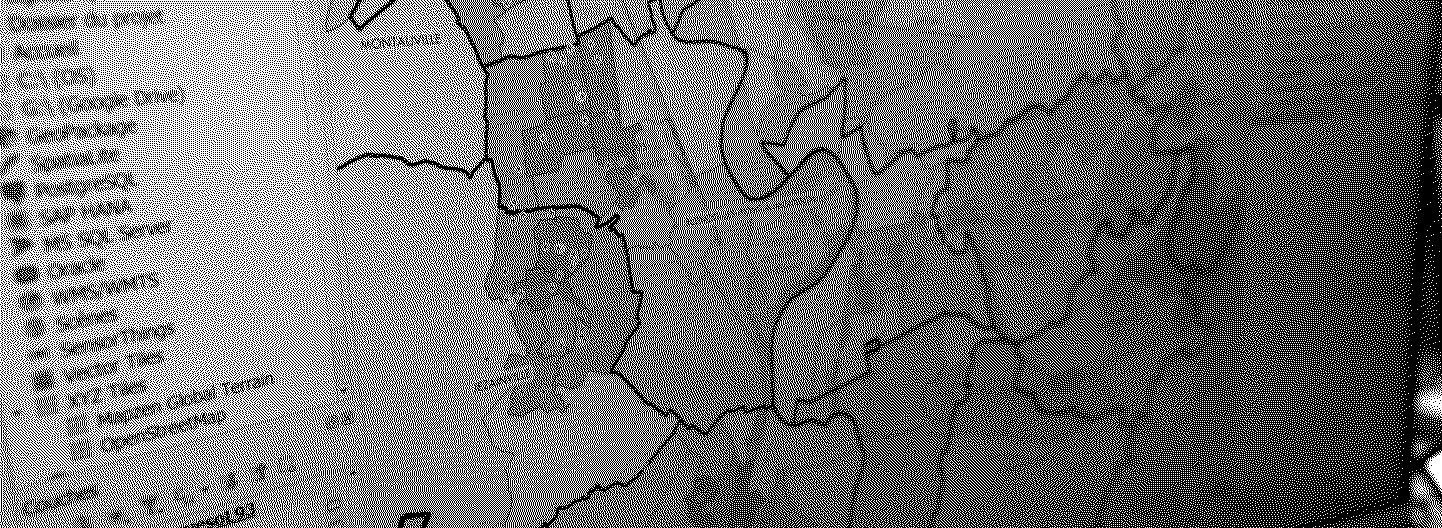
Territorial diagnosis and spatial visualization
- Identify and understand the territorial ecosystem in relation to your needs,
- Map challenges (GIS tools),
- Conduct a territorial monograph,
- Build a territorial development strategy.
Mapping of actors and controversies
- Identify actor coalitions and their positioning,
- Understand and characterize the nature of potential oppositions,
- Evaluate the criticality of risks and uncertainties,
- Build a narrative and positioning.
Territorial dialogue and facilitation for cooperation
- Support dialogue between stakeholders through expertise and methods,
- Formulate scenarios for arbitration,
- Evaluate solutions,
- Deploy decision-support tools.
Ignoring local and socio-political dynamics creates major uncertainties for development strategies.
Without debate and an understanding of territorial controversies and dynamics, projects are exposed to opposition or social and political inconsistencies. We support the anchoring of projects based on thematic legitimacy and scientific recognition, guaranteeing their sustainability.
Clarifying strategy
Validating the relevance of positioning or innovation
Succeeding in the integration of the project into the territory and with its actors

Public actors in the context of their strategic project deployment: local authorities (regional and inter-municipal competencies), public agencies (ADEME, DREAL, Chambers of Agriculture), European Union
Large groups and industry networks, particularly in the energy sector
Academic sphere: partnerships within the framework of research projects or research services in support of the project
Our tailor-made support is designed to be agile to best meet your needs. It is based on different stages, which are modifiable and adaptable depending on the situation.
1.
Understanding your needs and adapting the mission
The initial exchanges with our clients at the launch of the mission are often an adjustment space. Between the initial need expressed and the contributions of our expertise, adapted operational methods are defined so that our deliverables align perfectly with your needs.
2.
Documentary analysis, benchmarking, and ecosystem engagement
Depending on the needs, in addition to our specialized human resources, we are capable of deploying documentary analysis or conducting benchmarking to best position your project. APESA can also rely on a rich ecosystem of partners, including academics and subcontractors.
3.
Co-construction and Dialogue
Our experts and researchers are capable of meeting, through interviews, the central stakeholders whose voices and positioning must be considered. We can also deploy collective intelligence workshops to, notably, co-construct a territorial strategy or test hypotheses for project deployment in a collective and collaborative manner.
4.
Client relations and adaptation
As the mission progresses, regular updates organized with you allow for the potential adjustment of upcoming stages of the mission to take into account, in real-time, the findings of our work.


3 chemin de sers, 64121 Montardon, France
contact@apesa.fr
Follow us →