
Learn more
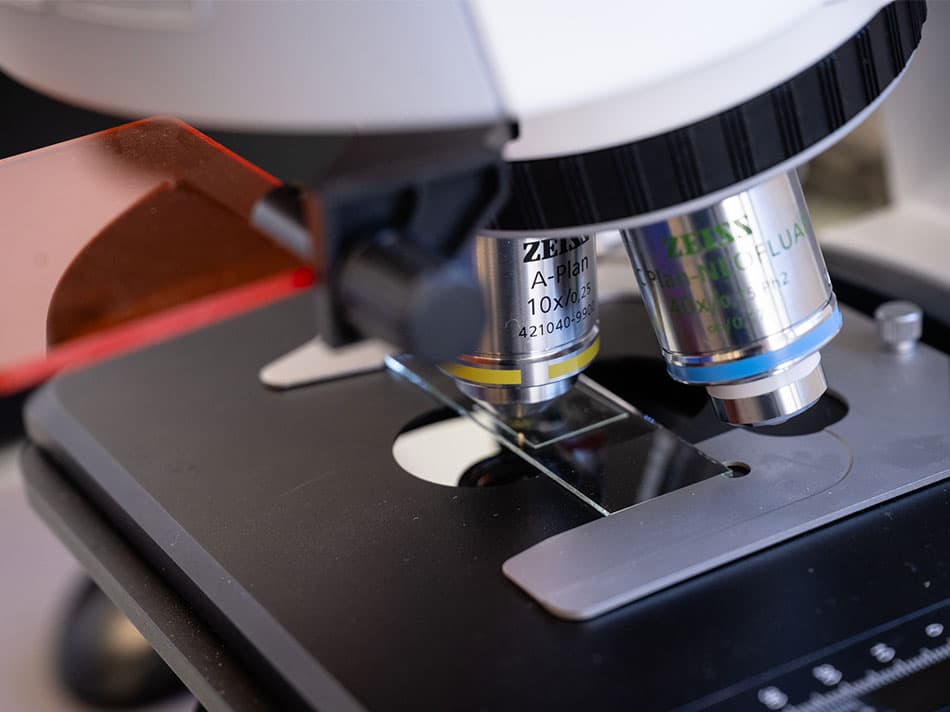

Bioresource valorization
Learn more
Specialists in biological processes for the valorization and treatment of bioresources, our researchers and technical experts work year-round on research, innovation and development, as part of private research projects or French, European or international research programmes.
What are the challenges?
Promote the emergence and development of sustainable technological projects and innovations in the fields of waste, biomass and effluent valorization.
Support the development and optimization of the biogas sector, and the sectors for valorization of organic matter and effluents: securing reliability, optimization, innovative technologies.
Promote the valorization of new streams and the development of value-added by-products within a logic of circular economy (valorization into products of interest: bioenergies, biomolecules, soil amendments and organic fertilizers).
Integrate the return to soil of organic matter into the objectives of the agroecological transition.
Support the development of innovative biodegradable products.
Why invest, and what prospects?
Support the sectors and provide real solutions to field constraints (complementarity between service provision and R&D).
Offer suitable tools/methods.
Develop technologies and products that are innovative and optimized for sector needs.
Anaerobic digestion, methanation and composting
Securing the valorization of new streams, biomass pretreatment, storage.
Improving anaerobic digestion and methanation performance.
Valorization of biogas, CO₂ and digestate.
Effluents and microalgae
Microalgae cultivation for effluent bioremediation (i.e. growth chamber, photobioreactors, raceway...).
Microalgae separation and harvesting techniques.
CO₂ capture and biogas upgrading.
Biodegradable materials
Study of bioplastics biodegradability in different environments, methodological development.
Study of biodegradability in anaerobic digestion and digestate valorization.
Application of pretreatments to improve biodegradability.
Did you know?
As part of a partnership with Arvalis, we have pooled our tools and expertise to offer a single tool dedicated to the study of anaerobic digestion and agronomy: the MetA Platform.
This centre of expertise offers a unique continuum from laboratory scale to pre-industrial scale dedicated to the study of the anaerobic digestion sector: R&D programme, training, dissemination, hosting of prototypes in industrial environments, etc.

Literature monitoring, drafting of reports, scientific articles and popular science articles.
Design, engineering and assembly of custom reactors (anaerobic digestion, methanation, composting, microalgae).
Tailor-made experiments to meet client needs.
Set-up of national (ADEME, ANR...) and European (H2020, Interreg, LIFE...) R&D projects, and support with drafting CIR files.
Facilitation and development of R&D networks.
Did you know?
All our services are eligible for the CIR.


3 chemin de sers, 64121 Montardon, France
contact@apesa.fr
Follow us →