Learn more


Material Biodegradability
Learn more
APESA supports you in evaluating the biodegradation of plastics and packaging in composting and anaerobic digestion.
We offer both standardized tests, under OK compost certification, and custom experiments simulating behavior under real-world conditions.
We offer our expertise, studies, and analytical facilities to evaluate biodegradability according to current certification standards and programs, as well as under real-world treatment facility conditions.
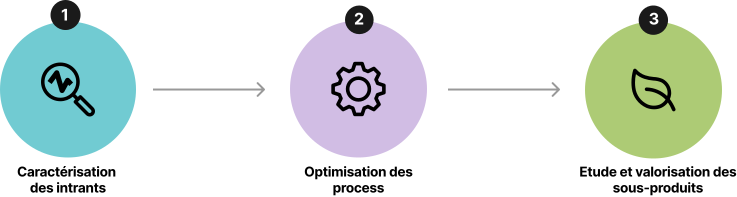
1

Standardized biodegradability study
We evaluate the biodegradability of your compounds and materials according to current certification standards and programs for industrial or home composting and anaerobic digestion.
As part of preliminary research, simplified and less costly screening tests can be conducted to assess the likelihood of passing certification testing and guide development choices accordingly.
| Industrial Composting NF EN 13432 OK compost INDUSTRIAL | Home Composting NF T 51800 OK compost HOME | |
|---|---|---|
| Test material characterization Metal content of test material | Arsenic, cadmium, chromium, copper, mercury, nickel, lead, selenium, zinc, cobalt + fluorine | Arsenic, cadmium, chromium, copper, mercury, nickel, lead, selenium, zinc, cobalt + fluorine |
| Biodegradation rate Measurement of ultimate biodegradation (conversion to CO2) under optimized and controlled conditions | Rate > 90% 58°C 6 months max | Rate > 90% 30°C 12 months max |
| Disintegration rate Measurement of disappearance at 2mm or visual under representative conditions | Rate > 90% Self-heating 3 months | Rate > 90% 20-30°C 6 months |
| Medium quality Measurement of potential impact of biodegradation in compost on plant germination and growth | Germination and growth rate ≥90% | Germination and growth rate ≥90% |
2

Process optimization
APESA has over 20 years of experience conducting pilot-scale tests on various biological waste treatment pathways such as anaerobic digestion and composting.
We have numerous pilot reactors for anaerobic digestion, composting, and effluent treatment and an associated specialized laboratory for analytical monitoring of these tests, enabling us to go beyond standardized testing and evaluate the behavior of biodegradable materials under real treatment facility conditions.
3

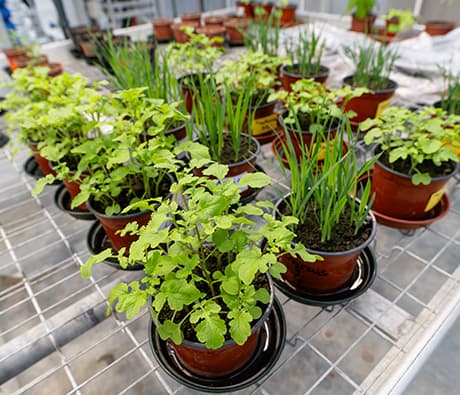
Study of biodegradable packaging impact on composts and digestate
Compost quality after biodegradation is considered in standardized evaluation.
To study digestate quality after biodegradation, APESA has additionally developed a wide range of ecotoxicity analyses:
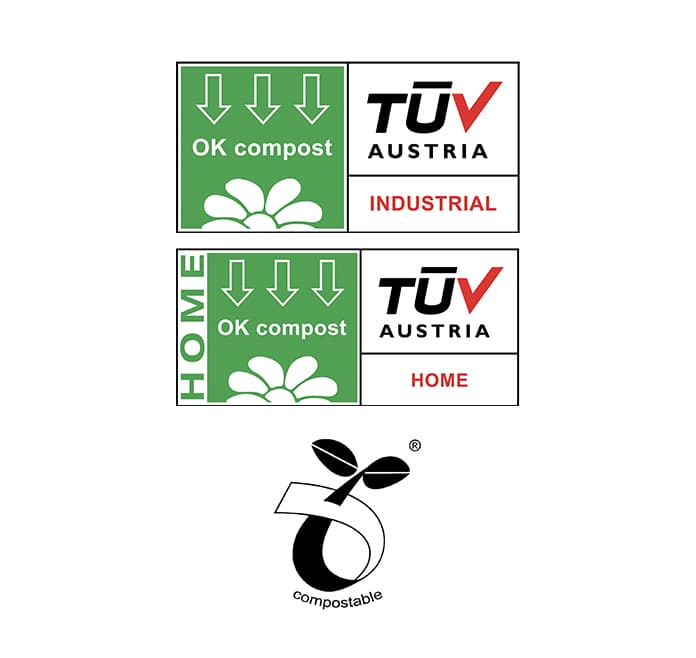
APESA is the 1st French laboratory to be recognized for home and industrial composting certification (OK compost HOME and OK compost INDUSTRIAL) by TÜV AUSTRIA and the seedling logo. Tests conducted at APESA as part of certification enable clients to submit a certification application to TÜV AUSTRIA.
APESA offers several research areas related to biodegradability.

You are developing new polymers or packaging and want to test their biodegradability (NF EN 13432 in composting)
You want to obtain OK compost HOME or INDUSTRIAL certification with a laboratory recognized by TÜV AUSTRIA
You are looking for a laboratory to support you in developing packaging degradable in anaerobic digestion
You have questions about the behavior of your biodegradable packaging under real-world conditions
Biodegradation conditions differ depending on the environment. Measuring packaging biodegradability is therefore only meaningful when specifying the degradation environment.
APESA offers all analyses required to evaluate biodegradability in anaerobic digestion, relying on existing standards and adapted protocols for missing standards.
Indeed, in anaerobic digestion, no framework standard (known as "specifications") specifies the requirements and methods for determining a material's capacity to biodegrade under anaerobic digestion conditions.
Only method standards (known as "analysis and testing") exist to measure test material biodegradation by evaluating associated biogas production (CH4 and CO2).
For manufacturers developing biodegradable or compostable plastics and packaging.
In anaerobic digestion, industrial composting, and home composting.
Yes. In accordance with standards EN 13432 and NF T51-800.
Yes. APESA is the first French laboratory recognized by TÜV AUSTRIA for OK compost HOME and INDUSTRIAL.
Yes. Through plant germination and growth tests.
Yes. As part of OK compost HOME certifications.
Yes. By producing the data required by certification bodies.


3 chemin de sers, 64121 Montardon, France
contact@apesa.fr
Follow us →