
Learn more

Bioresource valorization
Learn more
Our modes of intervention:
- Analyses and Pilot Testing
- Expertise and Consulting
- Training
- R&D
Anaerobic Digestion
A consulting laboratory for the study and securing of your anaerobic digestion projects.
Composting
Technical and practical responses for the sizing and feasibility of composting projects.
Effluents and microalgae
Support to optimize the treatment and valorization of your effluents.
Material Biodegradability
A certified laboratory for the evaluation of material biodegradability according to standards and labels and the establishment of proof of concept.
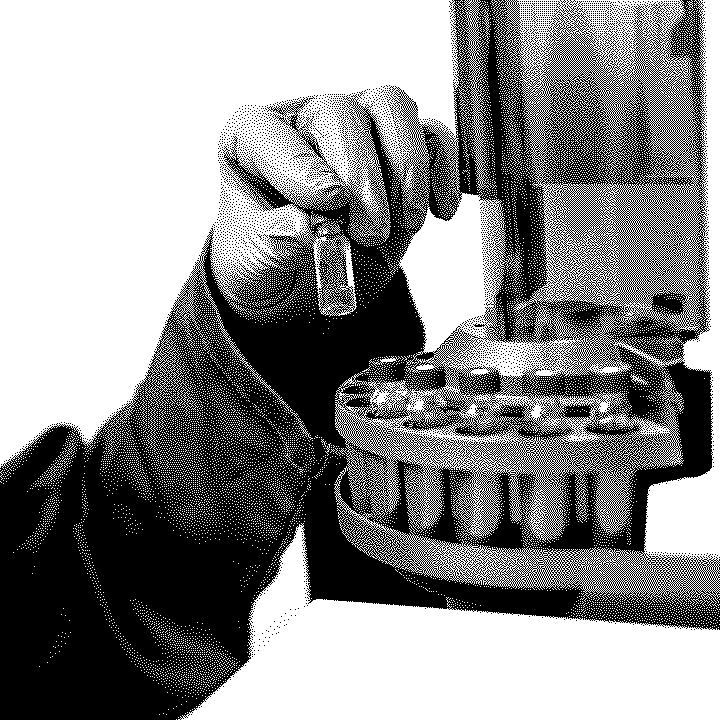
We offer scale-up, from bench-scale analyses of a few milliliters, to pilot scale, then to pre-industrial scale, in order to progressively address increasingly complex and field-representative conditions.
Our expertise covers all components of the process: from the characterization of biomasses, resource deposits, and inputs, through process study, to the study of by-product valorization and quality.
Whatever the maturity level of the project, from idea to operation, APESA adapts to your context and challenges for tailored responses.
Emergence phase: monitoring, applied R&D, design assistance, training.
Validation phase: analyses, proof of concept, pilot-scale validations, studies.
Operating phase: operational support, analyses, audits, training.
Did you know?
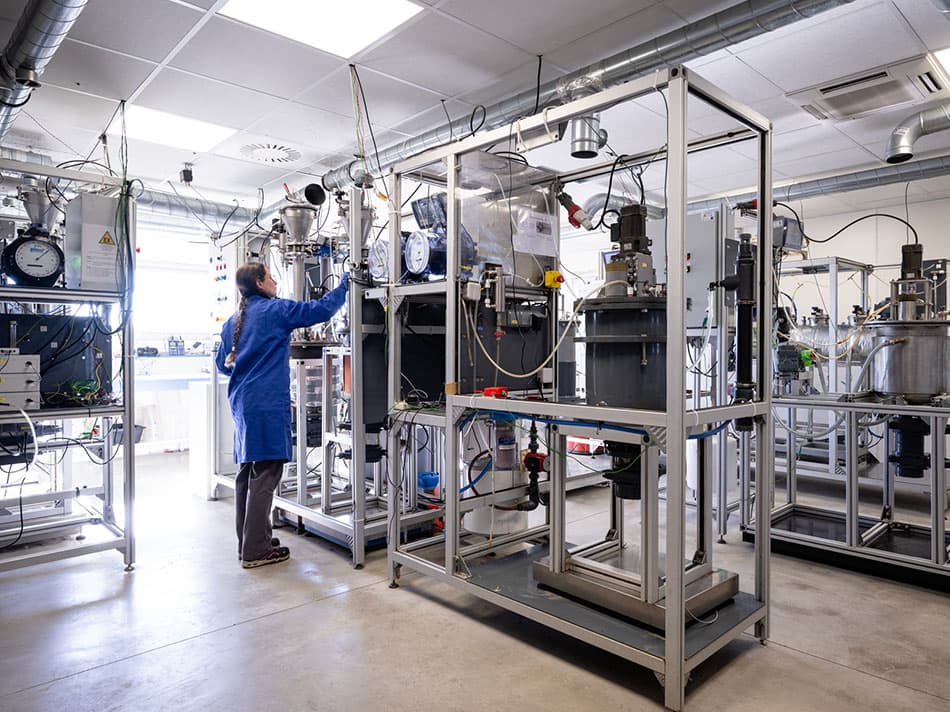
APESA relies on an experimental platform of over 1,000 m². Our experimental and analytical laboratories offer a set of state-of-the-art equipment and pilots enabling the study and simulation of various bioprocesses for waste, biomass, and effluent treatment and valorization, from laboratory scale to semi-industrial scale.
Do you wish to validate the sizing of a project? Develop a new technology? Study a new resource deposit?
A poorly sized project can lead to significant cost overruns. Securing technical choices and investments is critical.
Many organizations face concrete challenges:
Technical uncertainties about process feasibility or performance that complicate the transition from idea to proven concept
Need for objective evidence to convince partners, funders, or authorities
Verify and provide assurance on process operation and on the quality and valorization of output products (digestates, composts, biomasses…)

Developers, project leaders, and engineering firms
Farmers and industrial operators
Funders and manufacturers
Local authorities














Our team of approximately 15 people brings together complementary and versatile experts for tailored responses.
techniciens
responsable maintenance et conception
chargé(e)s de mission
chargé(e)s et chef(fe)s de projet, dont 3 docteurs
soutien administratif et logistique laboratoire
Des alternants en renfort de l’équipe


3 chemin de sers, 64121 Montardon, France
contact@apesa.fr
Follow us →