

Learn more


APESA Governance
Learn more
APESA has chosen the status of Société Coopérative d'Intérêt Collectif (SCIC) to sustainably align its mission, values, and decision-making process.
This governance model enables us to involve our stakeholders in strategic directions and to build transitions collectively, over the long term.
Transitions are not decreed; they are built collectively, based on field realities.
Share understanding of challenges, cross perspectives and skills
Debate directions and decide democratically
Transform practices operationally
This framework guarantees balanced, democratic governance oriented toward collective interest.
Balance
Each member has one vote in the general assembly, regardless of their capital contribution.
Non-Profit
Our members receive no dividends.
Confidential
Our members have no access to the results of missions and work carried out by APESA.
Created in 1995, APESA was born from a founding conviction:
Environmental transition requires crossing scientific, technical, economic, and social knowledge.
From its origins, APESA brings together:
- local authorities,
- economic actors,
- researchers and experts,
to explore pathways for transition, support concrete initiatives, and inform debate.
The transition to SCIC status is part of this continuity.
It formalizes a governance model consistent with a collective interest mission, carried forward for over 30 years.
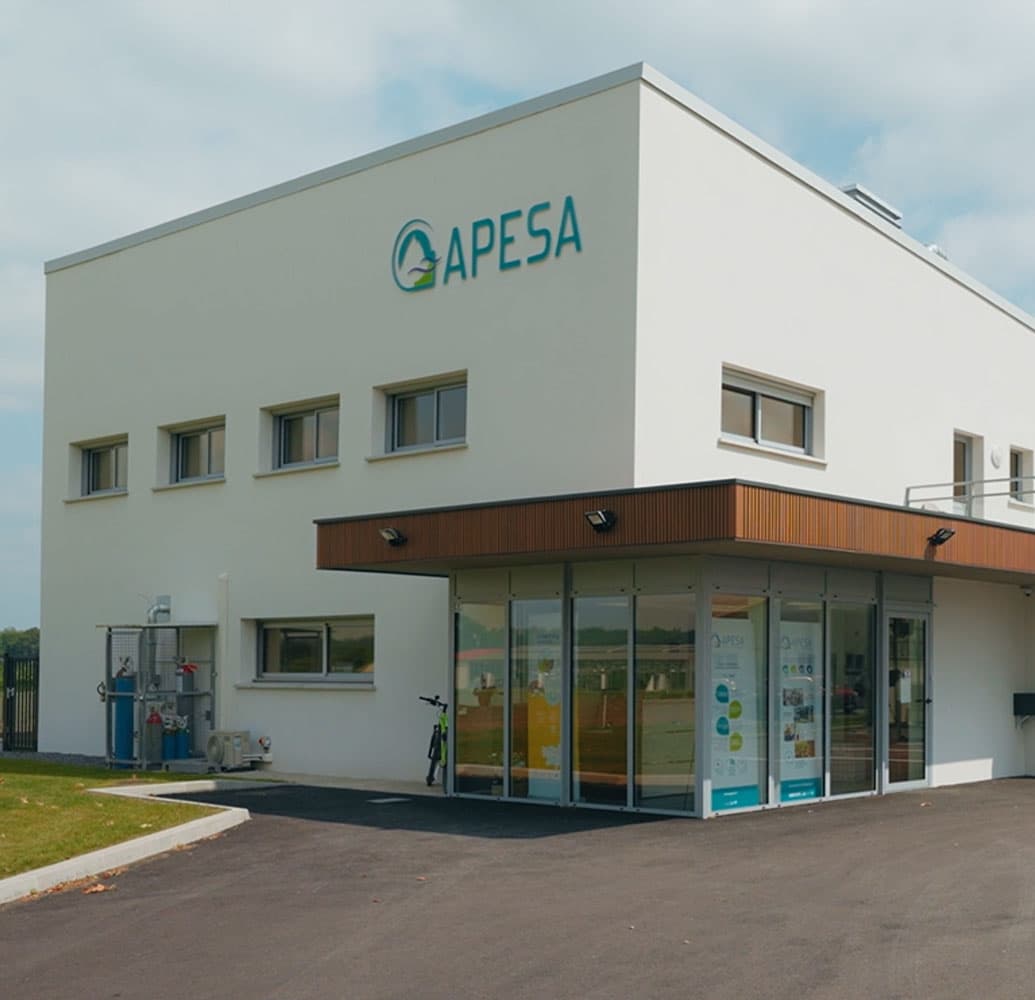

SCIC APESA is organized around 6 colleges that represent the diversity of its stakeholders:
1.
SCIC Employees
This college brings together the employee cooperative members of SCIC APESA.
2.
Universities and Research Centers
This college brings together universities and public and private research centers related to the activities of SCIC APESA.
3.
Public Authorities
This college brings together public law structures that use the services of SCIC APESA.
4.
Associations, VSEs, SMEs, Mid-Caps, and Professional Organizations
This college brings together structures that use the services of SCIC APESA falling into the VSE, SME, and mid-cap categories.
5.
Large Enterprises and Financial Organizations
This college brings together structures that use the services of SCIC APESA falling into the large enterprise category.
6.
Experts and Other Natural Persons from Civil Society
This college brings together all experts and other persons who have contributed or are contributing to the development of SCIC APESA.
TIPEE
NOBATEK
AVENIA - Association
Coopérative TIERS LIEUX
CBE Seignanx
METAPOLIS
HELIOPARC
DE GUILLEBON Benoit
DE LA FONTAINE François
PERIE Frédéric
ALLEZARD Virginie
Come Together
Contribute to defining common objectives, build new pathways for transition.
Get Involved
Participate in the decisions and strategic directions of the organization, structure ambitious approaches.
Progress
Anticipate ecological risks beyond regulation, accelerate the transition toward more sustainable models, adapted to current and future challenges.


3 chemin de sers, 64121 Montardon, France
contact@apesa.fr
Follow us →