Learn more

Anaerobic digestion
Learn more
What is a pilot test?
Pilots simulate, under controlled conditions, the actual operation of anaerobic digestion units and allow for the precise prediction of biological health, biogas production performance, and the production of representative digestate to anticipate its valorization.
What is the purpose of a pilot test?
Establish a proof of concept
Search for the optimal ration
Secure the treatment of new, unknown inputs
Validate sizing and performance
Study and anticipate potential inhibitions
Anticipate digestate valorization
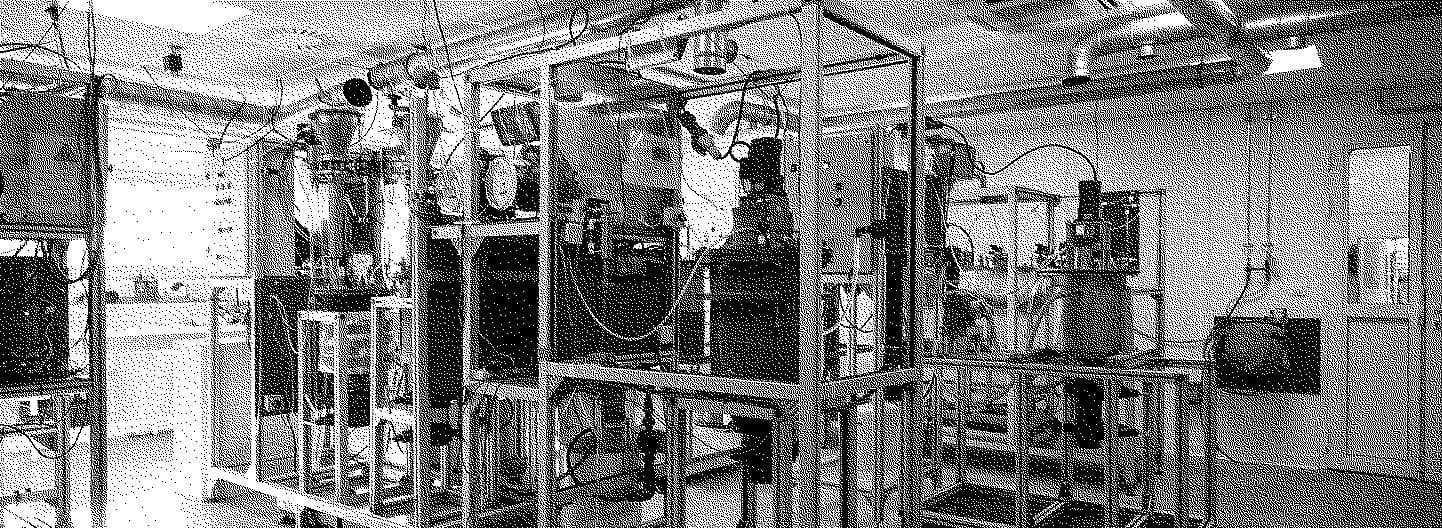
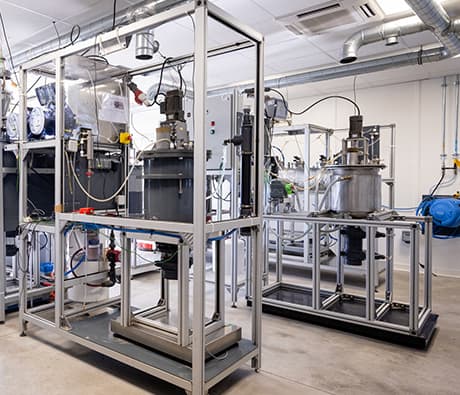
15 instrumented pilots
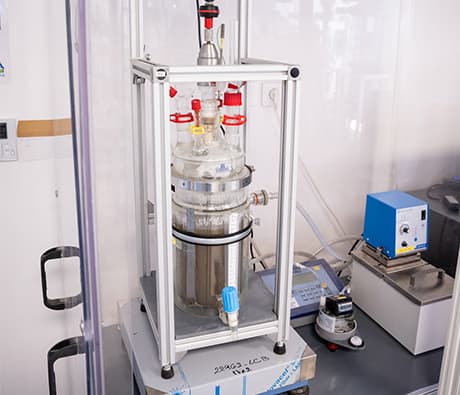
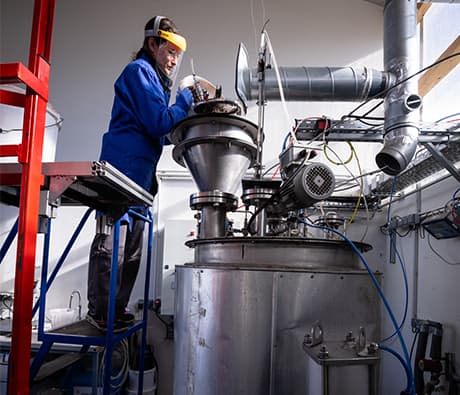
Our fleet of 15 anaerobic digestion pilots from 5L to 500L covers all technologies (liquid, wet and dry processes, mesophilic, thermophilic).
Depending on the issues studied, we mobilize our various pilot reactors and propose a customized study protocol.
Simulation of all process steps
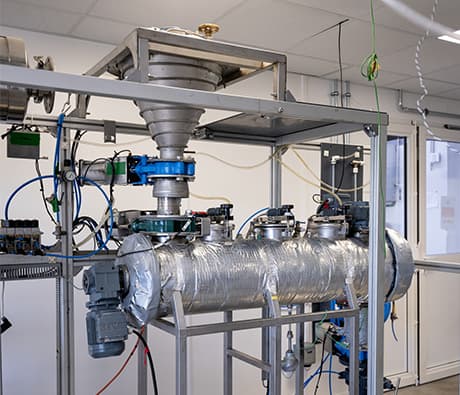
We have the tools and pilots to simulate the upstream and downstream steps of the processes:
- Hygienization,
- Phase separation (screw press, centrifugation),
- Nitrogen reduction,
- Aerobic treatment,
- Aerobic stabilization and maturation of solid phases.
- …
State-of-the-art analytical monitoring
These instrumented reactors are associated with state-of-the-art analytical tools for process monitoring:
- Gas chromatography (GC, µGC),
- Liquid chromatography (HPLC),
- UV and near-infrared spectrophotometry.
All our pilots are placed on a scale to control the working volume throughout the study.
Acidosis risks, toxicity phenomena, inhibition, deficiency, and eliminating the risk of biological dysfunction.
Based on the planned sizing or by pushing limits to identify the most critical sizing.
Biogas flow and quality, in order to size the unit based on reliable and representative data or to objectively and scientifically establish the gain of certain innovative technological solutions (additives, pretreatments, etc.).
A digestate that can be studied from the perspective of its agronomic valorization or as part of a Marketing Authorization application.
Did you know?
Part of the laboratory and 4 pilots from 20 to 500L are equipped for the study of biological methanation, allowing for the biological conversion of part of the CO₂ into CH₄.


3 chemin de sers, 64121 Montardon, France
contact@apesa.fr
Follow us →